Fortress Hohensalzburg
About Fortress Hohensalzburg
- Seating categories: Category 1 offers assigned seating in the first 6 rows of the Golden Hall or the first 7 rows of the Arms Hall, while Category 2 provides unassigned seating from row 7 onwards in the Golden Hall or from row 8 in the Arms Hall.
- Seating capacity: The fortress can host over 100 to 150 visitors.
- Best seats: The Category 1 seats offer clear, unobstructed views and are closest to the performers.
- Good value seats: Category 2 seats are farther back, but more affordable, while still offering excellent acoustics for a great listening experience.
- Recommendations: If you prefer extra legroom, an aisle seat is your best bet.
Hohensalzburg Fortress, perched atop Festungsberg hill, is one of Europe’s largest and best-preserved medieval castles. It was built in 1077 under Archbishop Gebhard I of Helfenstein during the Investiture Controversy, a power struggle between the Holy Roman Emperor and the Pope. The fortress was designed to protect the prince-archbishops of Salzburg, who ruled the region both politically and religiously.
Over the centuries, various archbishops expanded and reinforced it, with significant upgrades around 1500 under Archbishop Leonhard von Keutschach. He added the grand staterooms and the iconic ‘Salzburg Bull’, a mechanical organ still housed within the fortress.
Remarkably, Hohensalzburg was never conquered, even during the German Peasants’ War in 1525. In the 19th century, it served as military barracks and later as a prison, holding Italian prisoners of war during World War I. Today, the fortress stands as a symbol of Salzburg’s rich history, offering breathtaking views of the city and immersive exhibits on its storied past.
- Architectural style: Initially Romanesque, the fortress evolved with Gothic elements during later expansions.
- Exterior: The fortress features imposing stone walls, multiple defensive towers, and bastions, all designed to withstand sieges. Its white facade and strategic hilltop position make it a dominant feature of Salzburg's skyline.
- Interior: The Hohensalzburg Fortress houses the Golden Hall, adorned with a coffered wooden ceiling and ornate marble columns. The Golden Chamber boasts intricate wood paneling and decorative elements symbolizing the archbishops' authority. The chapel, with its star-vaulted ceiling, adds to the fortress's architectural grandeur.
- Notable features: The ‘Salzburg Bull’, a 500-year-old mechanical organ housed within the fortress, remains operational and plays daily. The Reisszug, a funicular railway dating back to the 16th century, still operates today, transporting visitors from the base of Festungsberg Hill to the fortress.
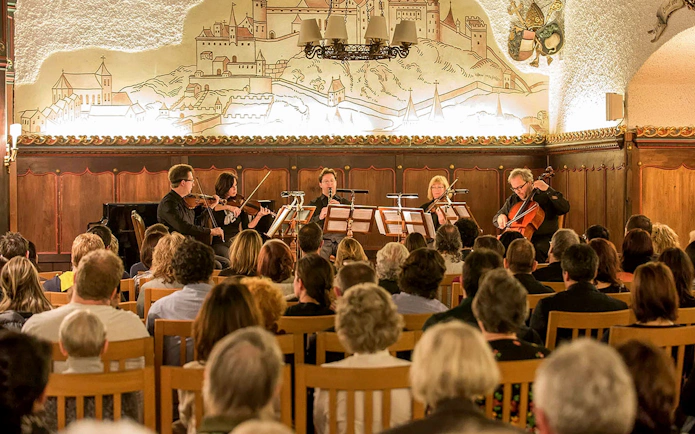
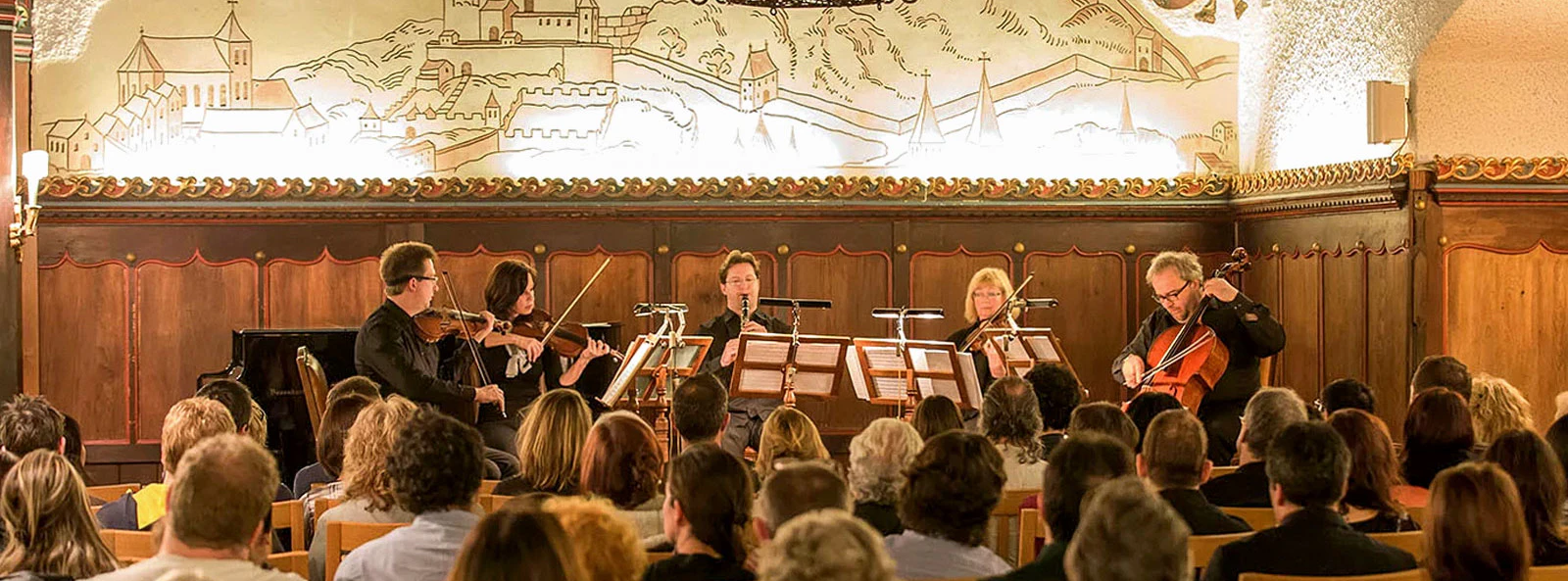
Fortress Hohensalzburg in Salzburg offers an exceptional musical experience with its renowned Best of Mozart Fortress Concerts. These performances, held in the historic Golden Hall and Arms Hall, feature acclaimed ensembles such as the Salzburg Mozart Ensemble and the Mozart Chamber Orchestra of Salzburg. The repertoire includes masterpieces by:
- Wolfgang Amadeus Mozart: *Eine kleine Nachtmusik *& Symphony No. 40
- ***Johann Strauss: **The Blue Danube (An der schonen blauen Donau), Op. 314 & Tritsch-Tratsch-Polka, *Op. 214
- Joseph Haydn: *Emperor Quartet (String Quartet No. 62) & Symphony No. 94 *(Surprise Symphony)
- Franz Schubert: *Ave Maria (Ellens Gesang III) & Symphony No. 8 *(Unfinished Symphony)
Know Before You Go
- Funicular (FestungsBahn): The FestungsBahn funicular departs from Festungsgasse 4 in the Old Town, reaching the fortress in under a minute. It operates daily from 9am, with closing times varying seasonally. This is the quickest and most convenient way to reach the fortress.
- Trolleybus: Lines 1, 3, 5, 6, and 25 head towards the city center from Salzburg's main railway station. Get off at the Vienna City Hall or Ferdinand-Hanusch-Platz. From there, it's a 10-minute walk through the Old Town to the FestungsBahn station.
- Parking: The Old Town is a pedestrian-only zone with restricted vehicle access. For parking, use public garages like Mönchsberg or Nonntal. Get discounted parking rates by having your ticket stamped at the fortress ticket window.
- Walking: For those who prefer a scenic route, a footpath from the Old Town leads to the fortress entrance. It takes around 20 minutes and offers picturesque views of Salzburg.
- Restrooms: Available at various locations within the fortress complex.
- Info Point (Visitor Information): Provides maps, brochures, and details on exhibits, tours, and events to help visitors make the most of their experience.
- Dining options: The Burgschenke Tavern and Hohensalzburg Castle Restaurant serve traditional Austrian dishes like hearty goulash, roast pork, and apple strudel, offering an authentic culinary experience in a historic setting.
- Gift shops: The on-site gift shops offer a variety of souvenirs, including handcrafted goods, postcards, and miniatures.
- Museums and exhibitions: The fortress houses several museums, including the Fortress Museum, Rainer Regiment Museum, and Marionette Museum, showcasing historical artifacts and exhibits.
- Discounted prices: Guests with a disability rating of 50% or more can receive reduced admission with a valid disability pass. An accompanying person is also eligible for the discount.
- Wheelchair accessibility: The Festungsbahn funicular offers easy, step-free access to Fortress Hohensalzburg. The entrance is located at Festungsgasse 4, and no prior registration is required. The Panorama terrace, Bastion, Castle courtyard, armory exhibition, Kuenburg Bastion, and Marionette Museum are fully accessible via a lift in the bell tower. However, some interior areas may have limited accessibility due to the historic nature of the site.
- Accessible restrooms: Wheelchair-accessible toilets are located next to the Info Point and inside the Fortress restaurant.
- Information boards and tablets: Tablets with a video tour of the interior, a video guide in sign language, and information brochures are available at the Info Point and in the area of the salt storage depot.
- Parking: The nearest disabled parking spaces are located at Residenzplatz 9 (6 spaces), Toscaninihof 1 (3 spaces), and Max-Reinhardt-Platz (10 spaces). The bollards in front of the Festspielhaus and Mozartplatz can be operated with the Euro-key.
- Arrive early: Don’t visit Hohensalzburg just for the concert. Instead, reach the fortress at least an hour early to visit the exhibitions and enjoy the panoramic city views before the performance.
- Consider the acoustic dynamics: The historic halls weren’t designed for concerts, so acoustics can vary. The center of the hall offers the most balanced sound, while front-row seats provide a more intimate experience with the musicians.
- Opt for the concert and dinner package: The Panorama Restaurant inside the fortress serves authentic Austrian cuisine. With the dinner package, you can enjoy dishes like Wiener Schnitzel, creamy pumpkin soup, and apple strudel before heading to the concert.
- Use restrooms before the show: Facilities inside the fortress are limited, and lines can get long right before the concert starts. It’s best to use the restrooms upon arrival or before dinner so you can relax and enjoy the performance without interruptions.
- Panorama Restaurant **(0km away): **Located within the fortress, this restaurant offers traditional Austrian and international dishes like spinach dumplings and trout fillets.
- Zipfer Bierhaus (2.5km away): A cozy establishment serving German and Austrian dishes, complemented by a selection of beers. Known for sausages and pretzels.
- Goldene Kugel (2.6km away): Situated on Salzburg's pedestrian shopping street, this restaurant offers typical Austrian cuisine. Specialties include Tafelspitz (boiled beef), Kaiserschmarrn (shredded pancake), and Viennese goulash.
- Taste of India (3.3km away): Offers authentic Indian cuisine with a variety of vegetarian and non-vegetarian options. Popular dishes include chicken tikka masala, palak paneer, and naan bread.
- St. Peter Stiftskulinarium (3.5km away): One of Europe's oldest restaurants, serving Austrian-Mediterranean cuisine. Must-try items include their homemade tafelspitz soup (beef soup) and tagliolini ‘as pesto e asparago’ (fresh pasta with basil, green asparagus, and sun-dried tomatoes).
Frequently asked questions about Fortress Hohensalzburg
The concert venue is inside the fortress, and the best way to reach it is by taking the FestungsBahn funicular, which runs from the city center and gets you to the top in just a few minutes. Arrive at least 45 minutes early to settle in comfortably.
Yes, you can book a combined dinner and concert ticket, which includes a multi-course dinner at the Panorama Restaurant, featuring traditional Austrian dishes like Wiener Schnitzel and apple strudel, followed by a classical performance in the fortress’s historic hall.
Seating is usually based on ticket category, with premium ticket holders getting the best spots near the stage. Since it’s a historic venue with an intimate setting, all seats provide good acoustics, but arriving early ensures the best possible experience.
Fortress Hohensalzburg is open all year round, but the timings vary by season. From January to April and October to December, it’s open from 9:30am to 5pm. During the warmer months (May to September), it stays open longer, from 8:30am to 8pm.
Most concerts at Hohensalzburg Fortress last about 1.5 to 2 hours, including a short intermission. If you are combining the experience with dinner, plan for at least three hours to fully enjoy the evening.
The concert halls at Fortress Hohensalzburg are heated, but since they are historic stone halls, they can still feel chilly in winter. To stay comfortable, it's best to dress in warm layers, especially during the colder months.
Yes, you can click pictures throughout most areas of the fortress. However, certain museum sections may have restrictions on photography or video recording. It’s always best to check for signage near exhibition areas.
Inside the fortress itself, you can visit the Rainer Regiment Museum and the Marionette Museum, showcasing artifacts from Salzburg’s rich history. Down the hill but just a short walk away, you will find Mozart’s Birthplace, the magnificent Salzburg Cathedral, and the Residenz Palace.