About St. Stephen’s Cathedral
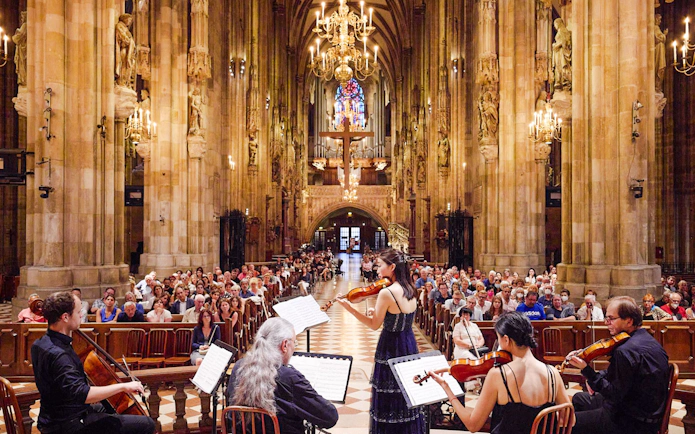
- Seating capacity & layout: The cathedral has around 252 assigned seats for classical concerts, arranged in rows facing the altar. Depending on the event, the church may arrange for additional seats.
- Front rows: Offer the best acoustics and clear stage views, making them ideal for an immersive experience. However, they may be pricier than other sections.
- Middle section: Provides a good balance of view, acoustics, and affordability. Sound carries well throughout the cathedral, making these seats a solid choice.
- Side & rear seats: Some side seats may have partially obstructed views due to columns, but they still provide a great listening experience.
- Pews: Wooden pews with no seatbacks may feel uncomfortable for long performances. Bring a small cushion or wear a long coat that you can sit on for a more comfortable experience.
- Best seat recommendations: Front and center seats offer the clearest view of the musicians, while middle-row seats provide a good mix of affordability and acoustics.
St. Stephen’s Cathedral, Vienna’s most iconic Gothic landmark, has stood for over 700 years, witnessing the city’s most significant historical events. Construction began in 1137, and the cathedral took its present form in the 14th and 15th centuries, with its 136-meter-high South Tower dominating Vienna’s skyline.
The cathedral has deep ties to Wolfgang Amadeus Mozart, who was married here in 1782 and had his funeral rites held in its halls in 1791. It has also served as the site of numerous royal ceremonies, including the wedding of Emperor Frederick III.
During World War II, the cathedral was severely damaged by fire, leading to a major post-war restoration. Today, it is home to one of Europe’s largest church organs, hosts regular classical concerts, and remains a spiritual and cultural symbol of Vienna.
- Style: St. Stephen's Cathedral showcases a blend of Romanesque and Gothic architecture, reflecting its extensive construction history from the 12th to the 15th century.
- Exterior: The cathedral is renowned for its multi-colored tiled roof, featuring intricate patterns and the iconic double-headed eagle, symbolizing the Habsburg dynasty.
- Interior: Inside, you can admire the Gothic nave, constructed between 1304 and 1450, and the early Baroque marble high altar, depicting the stoning of St. Stephen, crafted in 1647 by architect Johann Jacob Pock and his brother Tobias Pock.
- Notable features: The North Tower holds Pummerin, Europe’s second-largest free-swinging chimed bell. The South Tower’s observation deck, 67 meters high, offers stunning views of the city.
- Mozart's Requiem: Each year, at midnight on December 4th, the cathedral honors Wolfgang Amadeus Mozart by performing his Requiem in full, commemorating the hour of his death.
- Vivaldi's The Four Seasons: From mid-April to October, Antonio Vivaldi's renowned The Four Seasons is performed on Saturdays, bringing to life the vivid imagery of the seasons within the cathedral's historic walls.
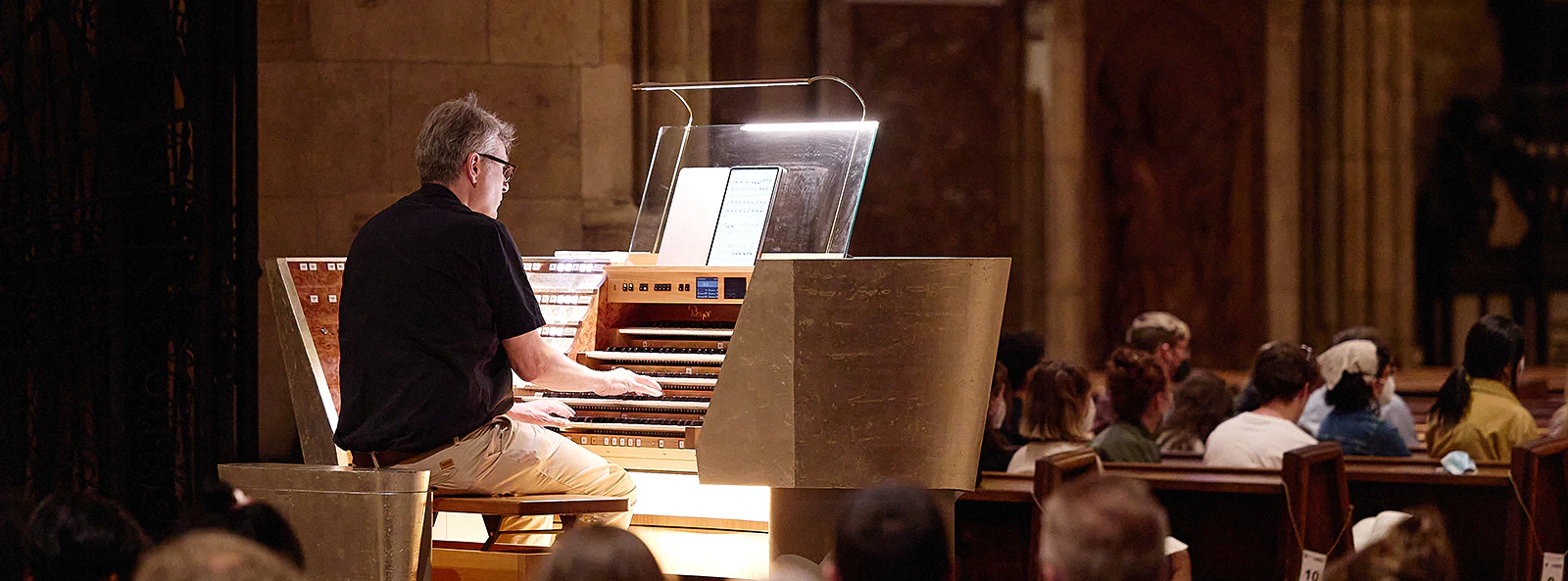
- Giant Organ concerts: Starting from mid-April, the cathedral hosts concerts featuring its monumental organ, boasting over 12,000 pipes. Esteemed organists present a diverse repertoire, from Bach to Reger, showcasing the instrument's vast capabilities.
- Advent concerts: In the lead-up to Christmas, the Harmonia Ensemble Vienna performs a series of Advent concerts, featuring trumpet, soprano, and baritone solos, creating a festive atmosphere within the cathedral.
Know Before You Go
- Subway (U-Bahn): The Stephansplatz station, served by lines U1 and U3, exits directly in front of the cathedral, making it the most convenient option.
- Bus: Lines 1A, 2A, and 3A stop at Stephansplatz, just a 1-minute walk to the cathedral.
- Light rail: The Schwedenplatz station, approximately a 6-minute walk away, is the nearest light rail stop.
- Train (S-Bahn): Lines S1, S2, REX1, and REX3 serve nearby stations, with Stephansplatz being the closest.
- Taxi: Cabs are readily available throughout Vienna and can drop you off directly at the cathedral's entrance.
- Restrooms: While the cathedral itself does not have public restrooms, facilities are available nearby at the Stephansplatz U-Bahn station.
- Gift shop: An on-site shop offers a variety of souvenirs and religious items. The shop is accessible during regular visiting hours between 7am and 10pm.
- Confession services: Confession is available from early morning until late evening, located towards the back of the cathedral, to the right and left of the entrance area.
- Concerts: The cathedral hosts regular orchestral and organ concerts, allowing guests to experience its exceptional acoustics.
- Barrier-free entrances: The main entrance is fully accessible, with step-free access and 120 cm-wide double swinging doors. However, the side entrance has three steps and 90 cm-wide doors, making it unsuitable for those with mobility impairments.
- Elevator access: The North Tower is accessible via an elevator with a door width of 65 cm, but there are an additional 12 steps, making it unsuitable for wheelchair users.
- Interior access: The main areas of the cathedral are designed to accommodate visitors with limited mobility, however, certain areas like the catacombs and towers are not wheelchair-accessible due to structural limitations.
- Accessible parking: Designated parking spaces for visitors with disabilities are available on Singerstrasse, near the cathedral.
- Service animals: Guide dogs are permitted within the cathedral premises to assist visitors with visual impairments.
- Accessing ticketed areas: General entry to St. Stephen’s Cathedral is free, but access to special areas like the catacombs, South Tower, and North Tower requires a separate ticket.
- Bring cash: Some ticketed areas inside the cathedral only accept cash, so it's best to carry euros to avoid any hassle. While ATMs are available at Stephansplatz, they often have long lines, especially during peak hours.
- Dress appropriately: As an active place of worship, modest clothing is appreciated. Consider wearing clothing that covers your shoulders and knees. Those wearing shorts, tank tops, or revealing clothing may be denied entry or asked to wear a provided cover-up.
- Photography restrictions: You can take photos inside the cathedral, but flash is strictly prohibited, and filming is not permitted in areas like the altar and confessionals to respect those in prayer.
- South Tower climb: If you are up for a challenge, climb the 343 steps of the South Tower for sweeping views of the city. The narrow staircase is steep and demanding, so wear comfortable shoes and pace yourself.
- Boxwood Restaurant (400m away): A modern Austrian eatery serving beef tartar (seasoned raw beef with egg yolk), parsnip cream soup, and the Boxwood salad (seasonal greens with house dressing).
- Restaurant Vienne/Onurchefs (450m away): Contemporary European cuisine featuring foie gras with apple and brioche, pumpkin textures with kombucha and black truffle, and oyster tartar with lemon and bacon.
- Turkis- Goldsmiedgasse (750m away): A traditional Turkish spot offering adana kebab (spiced minced lamb skewer), lahmacun (thin, crispy flatbread with minced meat and spices), and baklava (layered pastry with nuts and syrup).
- Restaurant Duchardt (800m away): French-inspired fine dining with dishes like a stingray with citrus and brandade, poularde de Bresse (premium chicken prepared in two courses), and baba au rhum (rum-soaked cake with tangerine and mascarpone).
- Restaurant Wienerin- 1010 Wien (1.0km away): Classic Viennese cuisine featuring wiener schnitzel (breaded and fried veal or pork cutlet), tafelspitz (boiled beef with horseradish), and sachertorte (dense chocolate cake with apricot jam).
Frequently asked questions about St. Stephen’s Cathedral in Vienna
St. Stephen's Cathedral stands proudly in Stephansplatz, the heart of Vienna, at Stephansplatz 3, 1010 Vienna, Austria.
The St. Stephen’s Cathedral hosts a variety of concerts, primarily focusing on classical and sacred music. Performances often feature works by renowned composers such as Mozart, Beethoven, Bach, and Vivaldi. During Advent and Christmas, special concerts add a festive touch, making the experience even more magical.
Seating inside the cathedral varies depending on the event. Some concerts offer assigned seating, while others may have open seating policies. The pews are traditional wooden benches, which can feel firm during long performances. Arriving early gives you a better seat choice and a chance to take in the cathedral’s stunning architecture before the concert begins.
It’s best to arrive at least 30 to 40 minutes before the performance begins to secure good seating, as most concerts have free seating within designated sections. The extra time also lets you soak in the cathedral’s stunning Gothic architecture before the performance begins.
No, most St. Stephen’s Cathedral concerts do not have an intermission, as they typically continue for 60 to 70 minutes. Be sure to use the restroom beforehand, grab a bottle of water, and settle in comfortably before the performance.
Yes, the cathedral strives to accommodate all visitors. The main entrance is step-free, and there are designated areas for wheelchair users. However, some sections, like the towers, have limited accessibility due to their historic design.
While there is no strict dress code, it's respectful to wear modest attire, considering the cathedral's sacred nature. Avoid shorts, flip-flops, or overly casual outfits. Dress in layers, as the interior can be cool, especially during winter months.
Photography rules depend on the event, but in most cases, taking photos during performances is not allowed to preserve the atmosphere and respect the performers. However, you are usually welcome to take pictures before or after the concert to capture the cathedral’s beauty.
Absolutely. Stephansplatz is surrounded by great dining options. If you are looking for a classic Viennese experience, visit Cafe Central for a slice of apple strudel or sachertorte. For something more contemporary, try the oversized pork schnitzel at Restaurant Figlmüller.
St. Stephen's Cathedral is centrally located, making it a great starting point to explore Vienna's historic sites. The Hofburg Palace, Albertina Museum, and the Vienna State Opera are all within walking distance. During the festive season, the Stephansplatz Christmas Market offers a delightful experience right outside the cathedral.