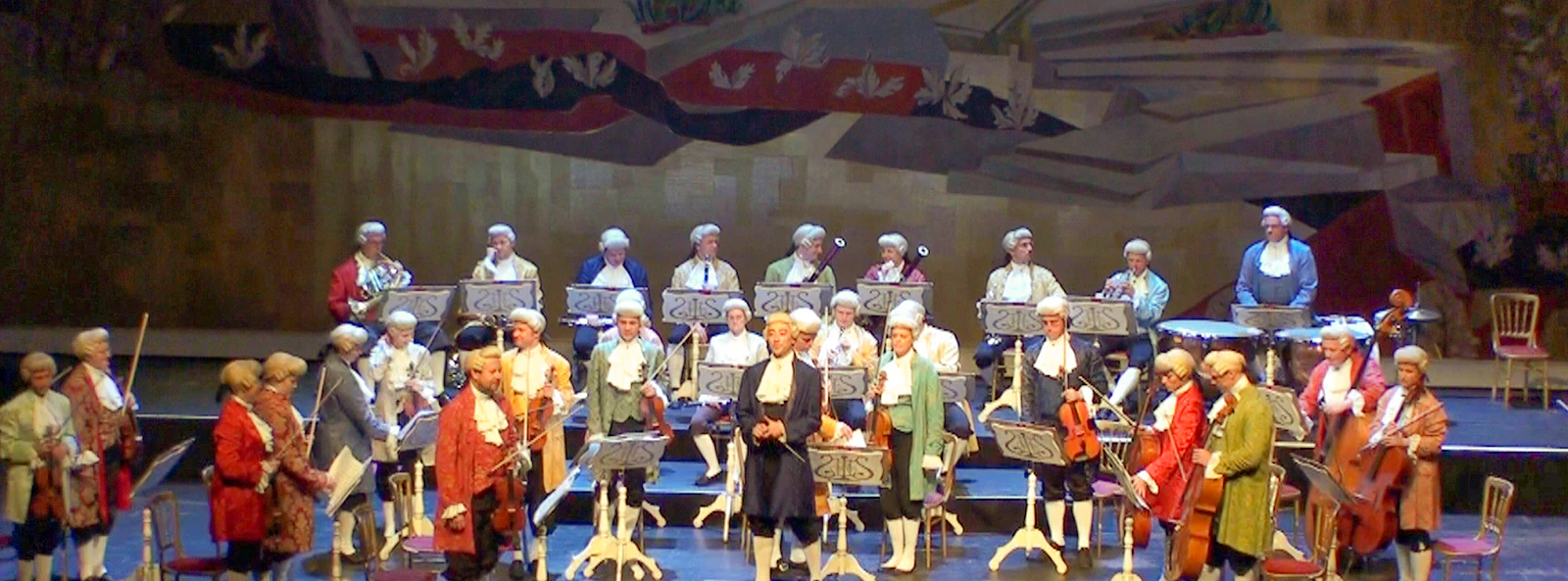
Vienna State Opera
The Vienna State Opera is one of the world’s most prestigious opera houses, renowned for its grand Neo-Renaissance architecture and rich cultural heritage since its opening in 1869. It hosts a diverse program of opera, ballet, and concerts, featuring world-class performers and offering over 300 performances each season.
About Vienna State Opera
Seating capacity: The Vienna State Opera has 1,709 seats and 567 standing places, divided into the Stalls (Parterre), Boxes, Balcony, and Gallery.
- Stalls (Parterre): Offers the best acoustics and direct stage views. Rows 6 to 12 offer the best mix of views and sound. Front-row seats provide an immersive experience but may require you to crane your neck.
- Boxes (Logen): Located on the sides, offering a luxurious setting. Front seats have excellent views, while rear seats can have obstructed sightlines.
- Balcony & Gallery: The balcony offers a clear, elevated view, while the gallery **provides budget-friendly options** but may have partially restricted views.
- Standing Room: A great budget alternative with good acoustics but you need to arrive early to secure the best spots.
Best seats & recommendations: Mid-center stalls (Rows 6 to 12) ensure a premium opera experience. For more legroom, opt for aisle seats in the stalls. Avoid rear gallery seats due to limited views.
The Vienna State Opera opened its doors on May 25, 1869, with a grand performance of Mozart’s Don Giovanni, attended by Emperor Franz Joseph I and Empress Elisabeth. Originally named the Vienna Court Opera, it was later renamed after the fall of the monarchy in 1918.
During World War II, the opera house was heavily damaged by bombing in 1945, leaving only parts of the main facade intact. After a decade of reconstruction, it triumphantly reopened in 1955 with Beethoven’s Fidelio, symbolizing Austria’s cultural revival.
Over the years, the opera house has hosted legendary performances featuring icons like Gustav Mahler, Richard Strauss, and Herbert von Karajan. Today, with over 350 performances annually, it remains a cornerstone of Vienna’s rich artistic heritage.
- Style: Designed in the Neo-Renaissance style, the Vienna State Opera reflects the grandeur of 19th-century European architecture.
- Exterior: The facade features arched windows, intricate stone carvings, and statues of muses. Notably, the building was the first major structure on Vienna's Ringstrasse.
- Interior: Inside, the grand staircase leads to opulent halls adorned with marble, stucco decorations, and frescoes. The auditorium, rebuilt post-World War II, combines classical elegance with 1950s design elements.
- Notable features: The ‘Schwind Foyer’ showcases frescoes by Moritz von Schwind, while the ‘Tea Salon’, once reserved for the emperor, now serves as a venue for events and is decorated with monograms of Emperor Franz Joseph and Empress Elisabeth.
- Don Giovanni (1869): Inaugurating the opera house, Mozart's masterpiece set a high standard for future performances.
- Ariadne auf Naxos (1916): Richard Strauss's innovative opera, blending serious and comic elements, premiered its revised version here, becoming a staple in the repertoire.
- Der Besuch der alten Dame (1971): Gottfried von Einem's opera, based on Friedrich Durrenmatt's play, had its world premiere here.
- Die Fledermaus (1979): Johann Strauss II's beloved operetta received a timeless production by director Otto Schenk, which continues to be celebrated today.
- Der Ring des Nibelungen (1986): Wagner's epic cycle was presented in a traditional staging by Otto Schenk, highlighting the opera's commitment to classic interpretations.
- Don Carlo (1990s): Verdi's profound drama saw notable productions under the direction of prominent figures, enriching the opera's legacy.
- Il viaggio a Reims (1992): Rossini's ensemble piece was revived, adding to the house's diverse offerings.
- Fidelio (2025): Beethoven's only opera is scheduled for performance in the current season, continuing the tradition of presenting seminal works.
Know Before You Go
- Subway (U-Bahn): The Karlsplatz station, served by lines U1, U2, and U4, is approximately a 3-minute walk from the opera house.
- Tram: Lines 1, 2, D, 62, and 71 stop at Karlsplatz, located directly outside the venue.
- Bus: Route 59A also stops at Karlsplatz, providing convenient access to the opera house.
- Local railway (Badner Bahn): The Vienna Oper station on the Badner Bahn line is situated adjacent to the opera house, offering direct connectivity.
- Parking: For those arriving by car, the Karntnerstrasse underground parking garage (Operngarage) is located at Herbert-von-Karajan-Platz, offering direct access to the opera house foyer.
- Bicycle: Bicycle stands are available directly to the left and right of the building, allowing cyclists to securely lock their bikes.
- Taxi: Taxi stands are conveniently located near the main entrance, ensuring easy access before and after performances.
- Cloakrooms: Complimentary cloakrooms are available near the entrances on Operngasse, as well as on the right and left balconies and in the gallery. Keep your coats, jackets, and bulky items for a hands-free opera experience.
- Cafe-Bar-Aperitivo: Located in the opera foyer, this cafe offers a wide selection of drinks, food, and snacks. Open daily from 10am to 6pm, and on performance days until 10:30pm.
- Restrooms: Facilities are located throughout the venue, including accessible restrooms in the stalls and gallery areas.
- Merchandise: You can purchase souvenirs and opera-related items at designated kiosks within the opera house.
- Program booklets: Available in both German and English, these booklets provide insights into the performance and can be purchased before the show and during intermission from the Audience Service.
- Wheelchair spaces: The venue provides 4 designated wheelchair spaces in the orchestra stalls and up to 18 spaces on the balcony, each accompanied by a companion seat. Due to high demand, we recommend reserving your seat in advance.
- Accessible entrances: A side entrance on Herbert von Karajan Platz offers access via a stair lift and elevator to the main areas, ensuring step-free entry for wheelchair users.
- Assistance animals: Guide dogs and assistance animals are welcome within the premises to support visitors with visual impairments.
- Parking: Find designated parking spaces opposite the main entrance, facilitating convenient access.
- Arrive early: Reach the opera house at least 20 minutes before the performance begins to find the best seats and settle in comfortably. Late arrivals are only admitted during intermissions to avoid disturbing the show.
- Dress appropriately: There’s no strict dress code, but men often wear jackets or collared shirts, while women opt for dresses or elegant separates. Avoid wearing flip-flops, shorts, or overtly casual outfits.
- Withhold the applause: Avoid clapping during interludes or pauses—wait for the conductor or performers to signal the right moment, usually at the end of an act or finale.
- Book in advance: Tickets can sell out quickly, especially for popular performances. We recommend reserving your tickets a few days before to ensure availability. If you are on a budget, consider purchasing standing-room tickets, available 80 minutes before each performance.
- Explore nearby landmarks: The opera house sits on the Ringstrasse, just a short walk from the Albertina Museum, Kunsthistorisches Museum, and Hofburg Palace. Make the most of your visit by exploring these cultural gems before or after the performance.
- 1516 Brewing Company (400m away): A craft brewpub offering chicken schnitzel a la Parisienne (breaded chicken pan-fried in butter), veal gulyas with dumplings (goulash soup), and homemade tagliatelle with beef ragu.
- GRND Restaurant (900m away): This historic establishment, operating since 1860, offers a fusion of Austrian and Ukrainian cuisines. Signature dishes include borscht (beetroot soup) and chicken kiev (breaded chicken breast filled with herb butter).
- Gastrovienna Wiener Restaurant (900m away): A classic Viennese eatery serving wiener schnitzel, tafelspitz (boiled beef with horseradish), and apfelstrudel (apple-filled pastry).
- Donnersmarkt Restaurant & Bar (900m away): A modern Austrian spot featuring grilled zander fillet (flaky, freshwater fish), venison ragout (slow-cooked stew in red wine), and kaiserschmarrn (fluffy shredded pancakes).
- Rinderwahn (1.6km away): A gourmet burger joint known for the truffle burger (beef with truffle sauce) and cheeseburger deluxe.
Frequently asked questions about the Vienna State Opera
Be sure to check online for any remaining seats, as cancellations sometimes free up spots. If regular tickets are sold out, your best bet is the standing-room tickets, which are released 90 minutes before the performance at the opera house’s designated counter. Arrive early, as lines can be long.
Absolutely! The Vienna State Opera offers a range of performances, including shorter concerts and well-known classics that are great for beginners. If you are new to opera, consider choosing a famous Mozart or Verdi production, which tends to be more engaging and accessible.
The Vienna State Opera is at Opernring 2, 1010 Vienna, Austria, situated on the famous Ringstrasse in the city center.
Arrive at least 20 minutes before the performance so you have enough time to find your seat and settle in comfortably.
While there is no strict requirement, most guests dress elegantly, especially for evening performances—think business casuals. If you're attending a premiere or gala night, expect to see men in suits and women in evening dresses, though a nice shirt and dress pants are perfectly acceptable.
No, outside food and drinks are not allowed inside the auditorium, and eating during the performance is discouraged. However, you can enjoy refreshments at the elegant opera café and bars inside the venue before the show or during intermission.
Yes! The opera house provides individual subtitle screens at each seat, offering translations in German, English, and other languages. This makes it easier to follow the story even if you are not fluent in the original language of the performance.
The duration varies depending on the performance, but most full-length operas run 2.5 to 3.5 hours, including intermissions. Shorter concerts and special performances, like Vienna Philharmonic concerts, usually last 60 to 90 minutes.
No, photography and video recording are strictly prohibited during performances to protect the rights of the artists. However, you can take pictures before the show, during intermission, and in the grand foyer, one of the most photographed areas inside the opera house.
Most full-length operas and concerts have at least one intermission, allowing you to grab a drink, admire the beautiful interiors, or simply stretch your legs. If you are attending a shorter performance, check in advance, as some may run without a break.
If you want the best view and sound, aim for the front rows of the balcony or the center stalls, as these offer a perfect balance of acoustics and visibility. However, even the affordable standing-room section provides an excellent experience, especially for those who don’t mind standing for long periods.
The opera house is close to major landmarks, including the Albertina Museum, famous for its world-class collection of graphic art, the Kunsthistorisches Museum, housing Bruegel’s largest collection in the world, and the Hofburg Palace, the former imperial residence of the Habsburgs.
